
Why Exercise?
What exercise does for your body (all ages)
Heart & metabolism: Improves blood pressure, cholesterol, insulin sensitivity, and cardiorespiratory fitness—your biggest levers against cardiovascular disease and type-2 diabetes.
Muscle, bone, joints: Builds/maintains muscle (strength = independence), increases bone density (fewer fractures), nourishes cartilage, and improves posture and joint alignment.
Brain & mood: Boosts blood flow and neurotransmitters linked to focus and mood; lowers anxiety/depression risk; supports memory as you age.
Mobility & balance: Keeps ranges of motion, coordination, and balance—key to moving well and preventing falls.
Inflammation & immunity: Moderate regular training tempers chronic inflammation and supports immune function.
Longevity & healthspan: More quality years—preserving the ability to do daily tasks, work, play, and recover from setbacks.
What matters most at each stage
Kids & teens: Skill development (running, jumping, throwing), bone building (impact + strength), healthy habits; reduces anxiety and improves attention.
Adults (20–60): Peak return on strength + cardio for disease prevention, performance at work, injury resilience, and body composition.
Older adults (60+): Strength + power + balance = independence (getting off the floor, carrying groceries), fall prevention, cognition protection.
Pregnancy & postpartum: Helps glucose control, mood, and recovery (with medical clearance and scaled intensity).
The simple weekly formula
Cardio: ~150 min/week moderate (e.g., brisk walk, bike) or 75 min/week vigorous (intervals, running).
Strength: 2–3 sessions/week, 6–10 total sets per major area (legs, push, pull, core).
Mobility/Balance: Daily 5–10 min joint ranges + 2–3×/week balance drills (e.g., single-leg stands).
Power for 60+: Include a few “quick but light” reps (sit-to-stand fast, light medicine ball toss) to keep reaction speed.
What to do (by goal)
General health: Walk most days + full-body strength 2×/wk + 5-minute mobility “snacks.”
Weight & metabolic health: Add 1–2 short interval sessions/week; keep protein adequate.
Back/joint comfort: Technique-first strength, gradual loading, hip/ankle mobility, core anti-rotation/extension work.
Balance/stability (older adults): Heel-to-toe walks, single-leg stands, step-ups, light carries.
Safety & progression
Start where you are; increase one variable at a time (volume, then intensity).
Keep most work at RPE 6–7 (you could do 3–4 more reps) and sprinkle harder efforts.
Red flags: chest pain, unexplained dizziness, new numbness/tingling—stop and seek medical care.
Bottom line
Exercise is not punishment or a phase—it’s maintenance for the human machine. Done consistently, it upgrades your heart, muscles, brain, and balance so you can keep doing what you love, longer.

Global Triceps Staples
Big compounds (heavy, great overload)
Close-grip barbell bench press (If mobility allows for it)
Weighted parallel-bar dips (torso upright)
Narrow/diamond push-ups
Close-grip dumbbell bench press (neutral grip)
Smith-machine close-grip bench / floor press
JM press (between close-grip bench & skull crusher) (For advanced lifters)
Elbows by your sides (lateral/medial head emphasis)
Cable pushdown (straight bar)
Rope pushdown (spread at the bottom)
Reverse-grip pushdown (underhand)
Single-arm cable pushdown (great for elbow comfort)
Machine triceps press
Overhead (long-head emphasis)
Overhead rope cable extension
Seated/standing overhead EZ-bar “French press”
Single-arm overhead dumbbell extension
Overhead kettlebell extension (horns up)
Cable “overhead cross-body” extension
Lying / angle-based extensions (big stretch + load)
EZ-bar skull crushers (to forehead, hairline, or behind head)
Dumbbell skull crushers (neutral grip, elbows tucked)
Incline/decline skull crushers
Hybrid pullover-to-press extension (DB or EZ-bar)
Accessory/finisher options
Dumbbell kickbacks (great peak contraction; lighter load)
Cable kickbacks
Bench dips (use caution—can irritate shoulders)
Band pushdowns / band overhead extensions (joint-friendly)
Quick programming notes
Strength/size anchor: 1–2 compounds (3–5 sets of 4–8).
Meat of the session: 1 overhead + 1 pushdown/side-by-side (3–4 sets of 8–15).
Finisher/metabolite: 1 lighter isolation (2–3 sets of 12–20 or a 60–90s set).
Technique cues that travel well
Keep upper arm fixed; hinge at the elbow.
Full ROM: deep stretch on overhead/lying work, hard lockout without snapping.
Neutral or slight underhand grips if elbows get cranky.
For long head, include something overhead weekly.
Popular weekly templates
Push day: Close-grip bench → Rope pushdown → Overhead cable extension.
Upper day: Dips → EZ-bar skull crushers → Single-arm pushdowns.
Home/minimal: Diamond push-ups (weighted) → Band pushdowns → DB overhead extensions.

Big compounds (front delts + overall mass)
Overhead press (barbell, seated/standing)
Dumbbell shoulder press (neutral/pronated)
Arnold press
Push press
Landmine press (one-arm or two-arm)
Machine shoulder press (selectorized/plate-loaded)
Lateral-raise family (medial delt width)
Dumbbell lateral raise (standing/seated)
Cable lateral raise (single-arm, behind-back start)
Machine lateral raise
Lean-away lateral raise
Partial/heavy laterals (“20–30° swings,” controlled)
Front-raise family (anterior delt focus)
Plate front raise
Dumbbell or cable front raise (alternating/2-up)
Barbell front raise
Landmine front raise
Rear-delt / scapular plane (posterior delt + upper back)
Reverse pec-deck
Bent-over dumbbell rear-delt raise
Cable rear-delt fly (high/low pulley)
Face pulls (rope to forehead)
Chest-supported rear-delt raises
Upright pull pattern (upper traps + medial delt)
Upright row (EZ-bar, cable, DB—shoulder-width grip)
High-pull (barbell, kettlebell)
Olympic/athletic (explosive shoulder involvement)
Power jerk / split jerk
Push jerk
Snatch balance / overhead squat (mobility dependent)
Kettlebell / unilateral staples
KB overhead press (hard-style)
KB bottoms-up press (grip/stability)
KB high-pull to press
KB arm-bar (mobility/stability)
Bodyweight / calisthenics
Pike push-ups / feet-elevated pike push-ups
Wall handstand hold / handstand push-ups
Wall walks
Dip-support/scapular elevation holds
Cuff & scapula (prehab/rehab—keep them in weekly)
External rotation (cable/band, elbow at side)
90/90 external rotation (cable/band)
Internal rotation (cable/band)
Y-T-W raises (incline bench)
Scaption raise (thumbs up, 30–45° forward)
Serratus punches (cable/band), wall slides
Programming quick hits
Hypertrophy split:
Press 3–5×5–8 → Lateral raise 3–4×10–20 → Rear-delt 3–4×12–20 → Cuff 2–3×15–25.Strength bias:
Primary press 4–6×3–5 (progressive overload) → Secondary press 3–4×6–10 → Raises 3×12–20.Frequency: 2–3 shoulder exposures/week (press one day, raises/rear-delt another).
Tempo: control the lowering (2–3 s) on raises; pause 1 s at the top of face pulls and laterals.
Pain rule: if upright rows or behind-neck presses irritate, switch to wider grips, cables, or landmine.
Form cues that travel well
Pack ribs; don’t overarch.
Press in the scapular plane (~30° forward of frontal).
On raises: lead with elbow/upper arm, stop just below shoulder height, soft bend in elbows.
For rear delts: think “drive pinkies out/back” not retract lats.
Keep 1–2 reps in reserve (RIR) on isolation to save the shoulder joint.

Tier A — Big compounds (primary builders)
Barbell flat bench press (medium grip)
Barbell incline bench (15–30°)
Dumbbell flat press (neutral or slight pronation)
Dumbbell incline press (15–30°)
Machine chest press (horizontal)
Smith incline press (fixed path = constant tension)
Weighted chest dips (torso forward, knees tucked)
Push-up (weighted/feet-elevated/Rings)
Tier B — Fly & press hybrids (deep stretch / long-length bias)
Dumbbell incline fly (15–20°)
Dumbbell flat fly (soft elbows)
Cable low-to-high fly (upper chest)
Cable mid-line fly (mid chest)
Cable high-to-low fly (lower chest)
Machine pec-deck (neutral or pronated)
Cable “press-around” (arcing press for adduction)
Tier C — Shortened-position/finisher (peak squeeze & metabolic)
Cable crossover (light–moderate, long hold at midline)
Landmine press-around / one-arm cable press-around
Push-up mechanical dropset (standard → knees or band-assist)
Iso-holds: midline cable fly 20–40s
Smart angles (quick cheat sheet)
Upper chest (clavicular): incline 15–30°, low-to-high cables, high-to-low press-around path slightly inward/up.
Mid chest (sternal): flat DB/BB, pec-deck, mid-line cables.
Lower chest: dips (forward lean), decline DB/BB, high-to-low cables.
Programming for growth
Session build:
Tier A heavy press: 1–6 sets × 1–6 reps @ RPE 7–9
Tier B stretch movement: 3–4 sets × 8–12 reps @ RPE 8
Tier C finisher: 2–3 sets × 12–20 reps or 30–60s constant-tension
Weekly frequency: 2×/week (e.g., Day 1 incline focus, Day 2 flat/low focus).
Progression: add 2.5–5 lb (1–2 kg) or 1–2 reps/week while keeping 1–2 reps in reserve on compounds.
Long-length bias: keep one stretch-focused movement (DB fly or deep-range press) in every session.
Technique cues that move the needle
Scapulae retracted & slightly depressed; ribcage up; mild arch.
Touch low-mid sternum; vertical forearms at mid-rep; elbows ~45–60° from torso.
On DB/flies: soft elbows, reach inward (adduct), not just up.
Control the eccentric (2–3 s), brief pause near chest on presses, full ROM.
Quick exercise picks by equipment
Only dumbbells: Incline DB press, Flat DB press, Incline DB fly, Flat DB fly, Push-ups (weighted).
Cables + bench: Low-to-high fly, Midline fly, Press-around, One-arm cable press; pair with incline DB/Smith.
Machines only: Incline/flat chest press, Pec-deck, Converging press; finish with slow pec-deck partials.
The Barbell Squat
Squats are the most important exercise for building overall strength and stability. They engage multiple muscle groups including the quads, hamstrings, glutes, and core, making them incredibly efficient for improving both physical performance and injury prevention. Emphasize squats not only to enhance muscular power but also to support joint health and functional movement in everyday life. Incorporating squats into your routine is essential for developing a strong foundation for both your body and mind.

“Today we’re breaking down one of the king exercises of strength training: the barbell squat. Not only does it build raw power, but it also targets multiple major muscle groups all at once.”
[Primary Muscles Worked]
Quadriceps (Front of the thighs):
“These are the primary movers during the squat. As you drive up from the bottom, the quads extend your knees, powering you out of the hole.”
Gluteus Maximus (The glutes):
“Your glutes fire hard to extend your hips and lock out the movement, making the squat one of the best exercises for building strong, athletic glutes.”
Hamstrings (Back of the thighs):
“While the hamstrings aren’t the prime movers, they play a critical stabilizing role—helping control the descent and supporting hip extension.”
Adductors (Inner thighs):
“These muscles help stabilize your legs and assist in driving your knees out, keeping your squat strong and balanced.”
5. Calves (Gastrocnemius & Soleus):
“They help stabilize the ankle and keep you balanced through the lift.”
Core (Abs, obliques, and spinal erectors):
“Your core works overtime to brace your spine, protect your lower back, and transfer power from your legs to the barbell.”
Upper Back (Traps, rhomboids, rear delts):
“These muscles keep the bar stable on your back and help you maintain an upright posture.”
“So in one movement—the barbell squat—you’re hitting your legs, glutes, core, and even your back. That’s why it’s called the king of exercises. Master it, and you’ll build strength that carries over into almost every other lift and athletic activity.”
The Barbell Deadlift
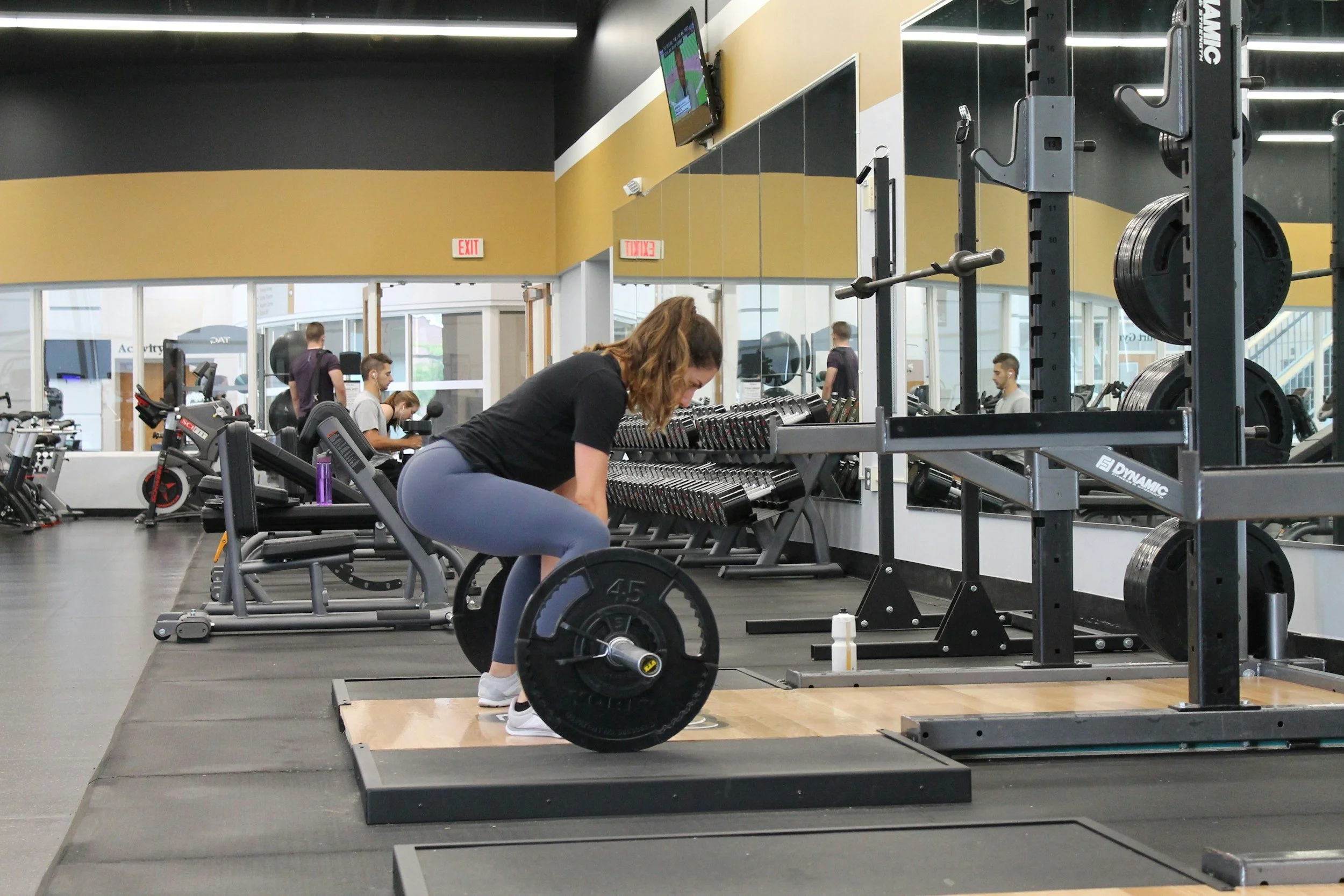
“The Barbell Deadlift”
The deadlift is the ultimate test of raw strength. There’s no hiding behind fancy machines, no shortcuts—just you, the bar, and gravity. You walk up, set your grip, lock in your posture, and pull heavy iron off the floor. That’s primal. That’s powerlifting.
How It Works
You hinge at the hips, not the knees. The bar stays close—dragging right up your shins, over your knees, to lockout at the hips.
Your spine stays braced, core tight, lats engaged. It’s not just a “back exercise,” it’s your entire body working as one unit.
Muscles Worked
Posterior chain—your hamstrings, glutes, and lower back. That’s your power engine.
Quads—they drive you off the floor.
Core and spinal erectors—they stabilize your spine under max load.
Traps, lats, and grip strength—you’re holding hundreds of pounds in your hands. If your upper back or grip is weak, you’ll fold.
Benefits
Full-body strength: No other lift carries over to raw strength like the deadlift. You build power from head to toe.
Athletic performance: Stronger deadlifts mean faster sprints, harder jumps, and more explosive movement.
Real-world carryover: Picking heavy weight off the ground is as functional as it gets.
Mental toughness: Heavy pulls test your grit. When the bar doesn’t want to move, and you grind it through anyway—that’s where champions are made.
Hormonal response: Deadlifts hit so much muscle mass, they trigger serious anabolic growth—more testosterone, more growth hormone, more strength.
Elite Tip:
“Don’t think of it as lifting the bar. Think of driving your feet through the floor and pushing the earth away from you. Lock your lats, brace your core, and the bar will follow.”
The Barbell Bench Press
It all begins with an idea.
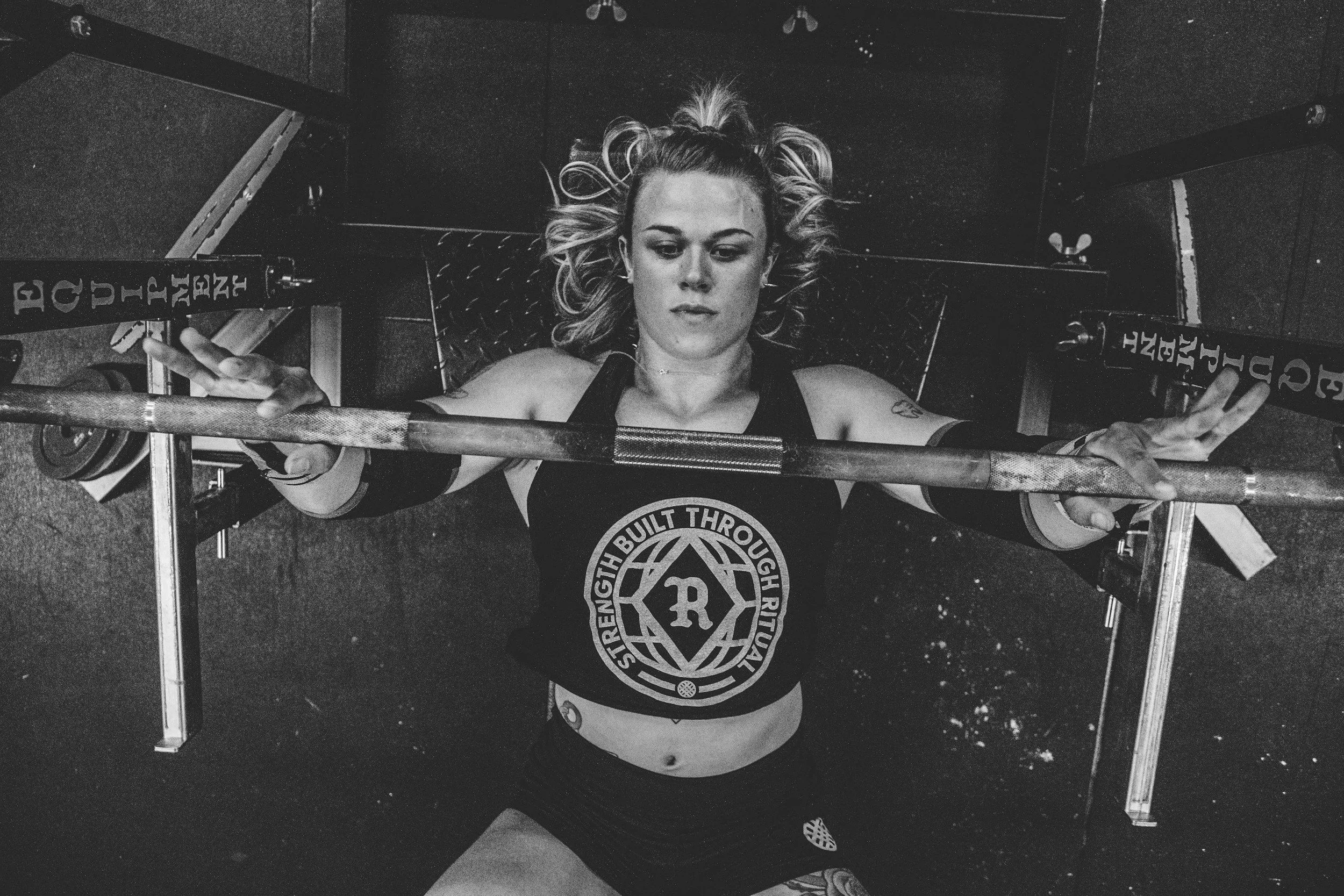
“The barbell bench press is one of the three classic powerlifting movements and a foundational exercise in resistance training. It is classified as a compound, multi-joint pushing movement primarily targeting the muscles of the upper body.”
Biomechanics of the Bench Press
Joint Actions:
Shoulder horizontal adduction (bringing the arms toward the midline).
Elbow extension (straightening the arms).
Scapular stabilization (keeping the shoulder blades retracted and depressed).
Movement Phases:
Eccentric (lowering phase): The bar descends under control, lengthening the pectorals and triceps eccentrically.
Concentric (lifting phase): The bar is pressed upward by concentric contraction of the same muscles.
Primary Muscles Worked
Pectoralis Major (chest) – prime mover for horizontal adduction.
Anterior Deltoids (front of the shoulders) – assist in pressing the bar.
Triceps Brachii (back of the arms) – responsible for elbow extension.
Secondary & Stabilizing Muscles
Serratus anterior – helps stabilize the scapula.
Latissimus dorsi – provides stability and assists with bar path.
Rhomboids & Trapezius – maintain scapular retraction.
Core musculature – stabilizes the trunk during pressing.
Benefits of the Bench Press
Upper body strength development: A gold standard for measuring pressing strength.
Hypertrophy stimulus: Highly effective for chest, shoulder, and triceps growth.
Performance transfer: Benefits pushing actions in sports (blocking in football, striking in combat sports).
Bone density & joint health: Resistance applied through large ranges of motion enhances musculoskeletal adaptation.
Neuromuscular efficiency: Trains intermuscular coordination between chest, shoulders, and triceps.
Key Technical Notes
Grip width: Affects muscle emphasis (wide = chest, narrow = triceps).
Scapular position: Retract and depress to protect the shoulders.
Bar path: Not straight up and down; slightly diagonal, forming a “J-curve.”
Foot placement & leg drive: Enhances stability and allows for maximal force transfer.
“The bench press is not merely an exercise for aesthetics; it is a scientific application of biomechanics and neuromuscular coordination. When performed with correct technique, it develops maximal strength, power, and hypertrophy in the upper body, while simultaneously reinforcing joint stability and athletic performance.”
RDL (Romanian Deadlift)
The Romanian Deadlift (RDL) is a key exercise for weight loss and body transformation. It targets hamstrings, glutes, lower back, and core, boosting calorie burn through muscle activation.
Why RDL matters for weight loss:
Boosts Metabolism: Engages large muscles, raising resting metabolic rate.
Enhances Fat Burn: Stimulates growth hormone, speeding fat loss and preserving muscle.
Improves Strength: Builds posterior chain, enhancing posture and daily movement.
Increases Efficiency: Combines strength and dynamic movement for a full-body workout fast.
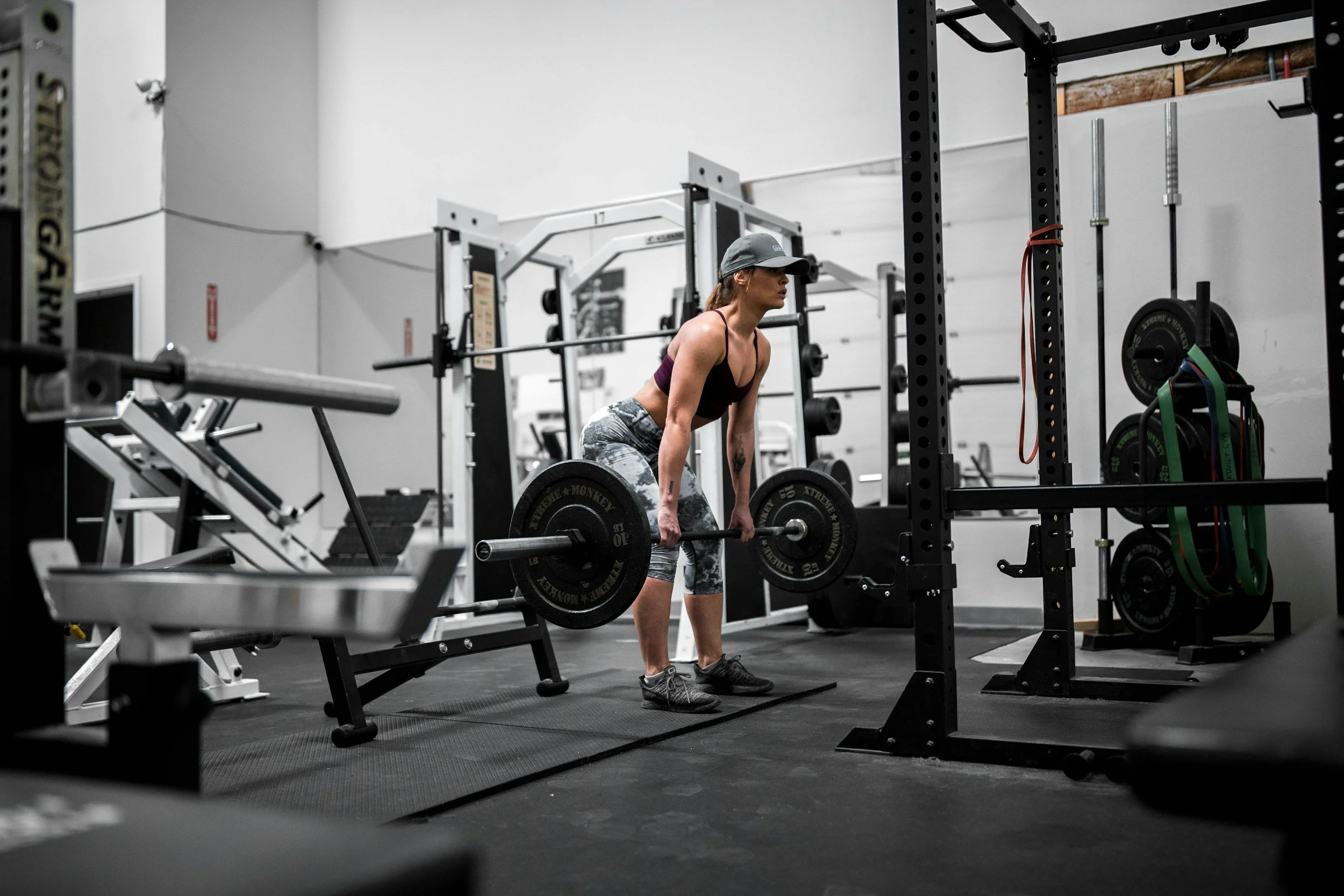
The Romanian Deadlift (RDL) is a strength training exercise that primarily targets the posterior chain — the muscles on the backside of your body. It is one of the best movements for building hamstring and glute strength, as well as reinforcing proper hip-hinge mechanics.
How to Perform the Romanian Deadlift
Setup:
Stand with your feet about hip-width apart.
Hold a barbell (or dumbbells) in front of your thighs with a shoulder-width grip, arms straight, and shoulders back.
Keep a slight bend in the knees (not locked, but not squatting).
Execution:
Hinge at the hips, pushing them backward while keeping the barbell close to your legs.
Maintain a flat back and neutral spine — chest stays proud, shoulders pulled back.
Lower the bar until you feel a deep stretch in the hamstrings (usually just below the knees or mid-shin).
Drive your hips forward to return to the starting position, squeezing your glutes at the top.
Muscles Worked
Primary:
Hamstrings
Glutes
Secondary:
Erector spinae (lower back stabilizers)
Adductors (inner thighs)
Core (stabilization)
Forearms and grip (holding the bar)
Benefits of the Romanian Deadlift
Hamstring and Glute Development
Builds stronger, more powerful posterior chain muscles which improve sprinting, jumping, and athletic performance.Hip-Hinge Mastery
Reinforces proper hinging mechanics, which transfer to squats, deadlifts, and many athletic movements.Injury Prevention
Strengthens the hamstrings eccentrically (on the lowering phase), reducing risk of hamstring strains and lower back injuries.Improved Deadlift Performance
Builds the strength and stability needed for conventional and sumo deadlifts, especially off the floor.Postural Benefits
Trains spinal stability and combats imbalances from sitting for long periods.